
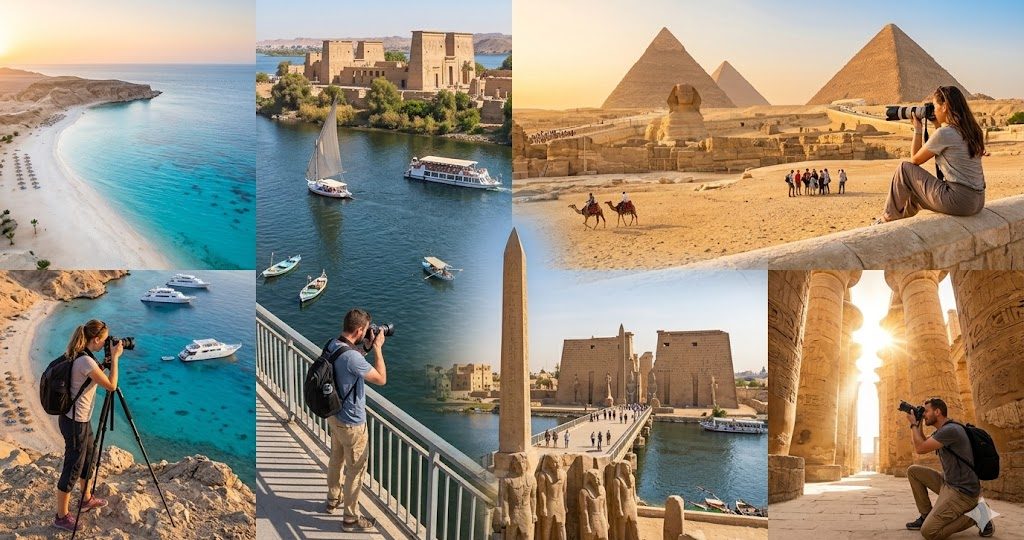
Egypt for Photography Lovers: Capturing History and Nature
Discover Egypt through your lens with our travel guide for photography lovers. Capture ancient monuments, scenic landscapes, and vibrant cultural moments across one of the world’s most visually stunning destinations.
Egypt is a dream destination for photographers, offering a unique blend of history, nature, and daily life. From the iconic Pyramids of Giza to the peaceful banks of the Nile River, every corner of the country provides an opportunity to create unforgettable images. Whether you are a professional photographer or an enthusiastic traveler, Egypt offers endless inspiration.
Capturing Ancient Monuments
Egypt’s historical landmarks are among the most photographed in the world. The Pyramids of Giza and the Great Sphinx of Giza create dramatic compositions, especially during sunrise and sunset when shadows and warm light enhance their grandeur.
In Luxor, the Karnak Temple Complex and Luxor Temple offer towering columns and intricate carvings, perfect for both wide-angle shots and detailed close-ups. The Valley of the Kings provides colorful tomb interiors filled with hieroglyphics that tell stories of the afterlife.
Further south, the Philae Temple offers unique compositions surrounded by water, making it ideal for reflection photography and creative angles.
Scenic Nile and River Life
The Nile River is one of Egypt’s most photogenic features. A felucca ride or Nile cruise allows photographers to capture palm-lined shores, small villages, and traditional boats moving across the water.
Early morning and late afternoon provide the best lighting, with soft reflections and golden tones enhancing every shot. Daily life along the Nile—fishing, farming, and riverside activities—offers authentic storytelling opportunities for photographers interested in cultural documentation.
Desert Landscapes and Natural Wonders
Egypt’s deserts provide dramatic and otherworldly landscapes. The White Desert is famous for its surreal chalk formations, while the Black Desert features volcanic hills and dark terrain.
These locations are perfect for landscape photography, especially at sunrise and sunset when shadows create texture and depth. Night photography is also popular in the desert, where clear skies allow for stunning images of stars and the Milky Way.
Oases such as Siwa Oasis add contrast with lush greenery, traditional architecture, and calm water reflections, offering a mix of natural and cultural subjects.
Street and Cultural Photography
Egypt’s cities are full of life, color, and movement. Markets like Khan El Khalili provide vibrant scenes filled with spices, textiles, and handcrafted goods. These environments are perfect for capturing textures, colors, and human interactions.
Photographers can also document daily life in villages and towns, including traditional crafts, local clothing, and social gatherings. Respect is essential—always ask permission before photographing people, especially in rural or culturally sensitive areas.
Festivals and cultural events offer dynamic opportunities to capture movement, music, and emotion, adding diversity to any photography collection.
Red Sea and Coastal Photography
The Red Sea coast offers a completely different photographic experience. Destinations like Sharm El-Sheikh and Hurghada are known for their clear waters and vibrant marine life.
Underwater photography enthusiasts can capture coral reefs, colorful fish, and shipwrecks, while beach landscapes provide opportunities for sunrise and sunset photography. The contrast between desert mountains and blue waters creates striking compositions.
Practical Tips for Photography Travelers
Best Time to Visit: October to April for comfortable weather and softer lighting conditions.
Golden Hours: Sunrise and sunset offer the best natural lighting for landscapes and monuments.
Equipment: Bring a camera with wide-angle and zoom lenses, a tripod, extra batteries, and memory cards.
Respect Local Culture: Always ask before photographing people and avoid restricted areas.
Stay Prepared: Carry water, sunscreen, and protective gear for your equipment, especially in desert conditions.
Hire Local Guides: They can help you find unique angles and less crowded locations.
Combining Photography with Travel Experiences
A photography trip in Egypt can be enriched by combining different experiences. A Nile cruise provides continuous opportunities to capture landscapes and daily life, while desert safaris offer dramatic scenery and night photography. Exploring temples and tombs adds historical depth, and visiting local communities introduces authentic cultural storytelling.
This approach allows photographers to create a complete visual narrative of Egypt, from ancient history to modern life.
Final Thoughts
Egypt is a paradise for photography lovers. From iconic monuments and serene Nile views to dramatic deserts and vibrant street life, every moment offers a chance to capture something unique.
Whether you are focusing on architecture, landscapes, or people, Egypt provides endless inspiration and variety. With the right timing, preparation, and respect for local culture, photographers can create powerful images that reflect the beauty and depth of this extraordinary country.
Capturing Egypt is more than taking photos—it is about telling a story of history, culture, and nature through your lens. Every image becomes a memory, making your journey through Egypt truly unforgettable.